
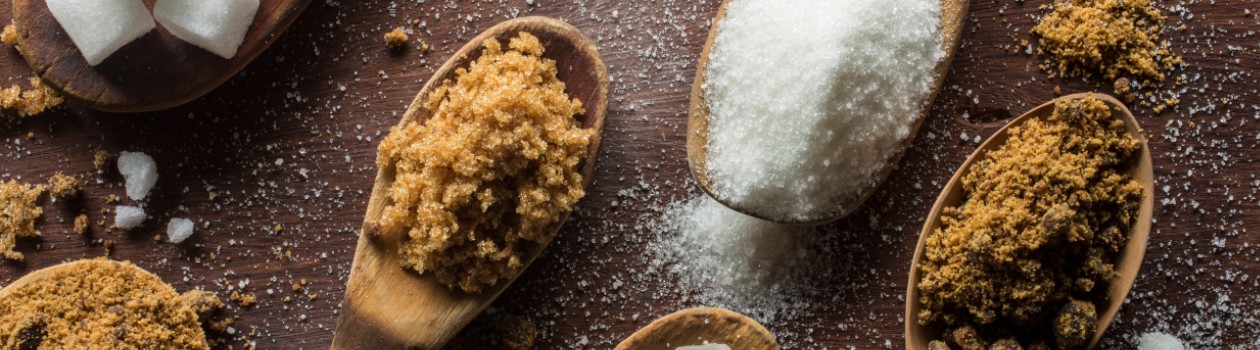
Behind the many white sugar substitutes are sweeteners with very different profiles that influence the results in the kitchen. Before incorporating them into your recipes, it’s best to understand what sets them apart.
Sugar substitutes from here and elsewhere
Unlike sweeteners, sugar alternatives remain nutritious sweeteners. They provide energy, give food texture and generally influence blood sugar levels.
Coconut sugar
Made from the sap of the coconut blossoms, coconut sugar has a slightly caramelized flavour reminiscent of brown sugar. Its texture and sweetness, comparable to that of white sugar, make it an easy substitute in muffins, cookies and other pastries. It is usually used in a 1:1 ratio.
Less processed than refined sugar, it contains trace minerals and has a lower glycemic index than white sugar. However, it remains a sweetener to be consumed in moderation.
Agave syrup
Extracted from the heart of the agave plant (native to Mexico), agave syrup has a sweetening power about 1.5 times greater than that of white sugar, especially in cold preparations. Its neutral taste and liquid texture make it an interesting choice for smoothies, cold drinks, salad dressings, and no-bake desserts.
Its glycemic index is relatively low, but its high fructose content continues to fuel discussions among nutrition experts. In cooking, about 60 ml (1/4 cup) of agave syrup replaces 100 g (1/2 cup) of sugar.
Corn syrup
Made from cornstarch transformed into glucose, corn syrup is especially appreciated for its technical properties. It helps prevent sugar crystallization and contributes to the smooth texture of caramels, candies, marshmallows and some baked goods.
Mainly composed of glucose, it also exists in versions richer in fructose. Less sweet than white sugar, it can replace it in some recipes with a few adjustments to the liquids. In baking, it is considered that it takes about 310 ml (1 1/4 cups) of corn syrup to replace 250 ml (1 cup) of white sugar.
Sweeteners: a category of their own
Sweeteners provide a sweet taste with little to no calories. Their sweetening power is often much higher than that of sugar, but they do not always replicate its functions in terms of texture, colouring or moisture retention.
Monk fruit
Despite its common name as “monk fruit sugar,” this is a natural sweetener. The native Chinese fruit gets its sweet taste from compounds called mogrosides. Depending on the product, its sweetening power can be 150 to 300 times greater than that of white sugar, while providing few or no calories.
Often combined with erythritol to replicate the texture of sugar, it is available in liquid, granulated or powdered form. Baking mixes typically replace sugar in a 1:1 ratio, while pure extracts are used in very small amounts.
Stevia
Derived from the leaves of a plant native to South America, stevia is one of the most well-known natural sweeteners. Its sweetening power is 200 to 300 times greater than that of white sugar, with no significant caloric intake or noticeable effect on blood sugar levels.
Available in powder, sachets or liquid format, it is suitable for drinks, desserts and certain cooked preparations. Its main disadvantage remains its sometimes bitter or licorice aftertaste.
Erythritol, sucralose and commercial mixtures
Erythritol belongs to the family of polyols, also known as sugar alcohols. Its relatively neutral taste, low calorie intake and sugar-like volume make it easy to use in baking. It can usually replace sugar in a ratio close to 1:1.
Sucralose, marketed under the brand name Splenda, has a sweetening power about 600 times greater than that of sugar. It is resistant to heat and is found in many products intended for cooking. Commercial blends like Truvia often combine stevia and erythritol to provide a milder flavour and texture closer to that of traditional sugar.
There is no perfect substitute for sugar. The best choice depends on the intended use, the desired taste and the expected results in the kitchen. If your primary goal is to reduce consumption, check out this article:
How to reduce refined sugar intake in your diet
