
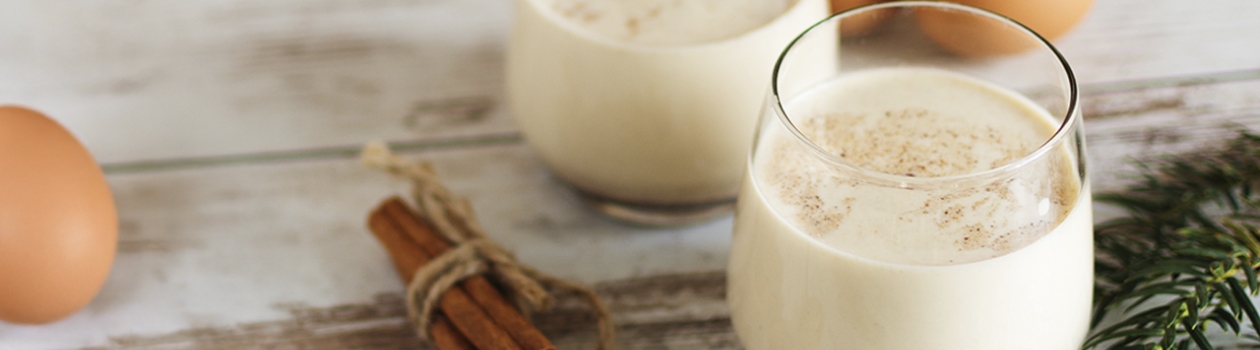
Eggnog is a comforting drink that has long been a part of holiday traditions. From its British origins to its rise as a grocery store staple, discover everything about this festive drink with a nostalgic taste.
Medieval Origins
In the Middle Ages in England, a drink called posset—considered to be the ancestor of eggnog—was common. Prepared from hot milk, coagulated with wine, beer or sherry, it was sweetened with honey and flavoured with herbs, spices or dried fruits. Both a remedy and a comfort drink, the beverage was used to warm British monks during the cold season and to relieve those suffering from colds or the flu.
Transition to Eggnog
Over time, the recipe was refined and eggs were added to enhance its texture and richness. It wasn’t until the 18th century, when British colonists brought the recipe to North America, that the drink became accessible to everyone. In the colonies, the abundance of milk and eggs simplified the preparation of eggs while sherry, a rare alcohol on the continent, was replaced by rum. Thus a homemade version of eggnog was born, served during the Christmas holidays or on special occasions.
Modern Marketing
In the 1960s, major brands began to produce pasteurized, ready-to-drink eggnog. This industrial version, often flavoured and offered with or without alcohol, has since become a seasonal classic widely offered in supermarkets during the holiday season. Today, there are even vegan variants, without eggs or dairy products.
Spices
The addition of cinnamon and nutmeg gives eggnog its characteristic flavour. Every year during the holidays, this aromatic signature inspires a host of seasonal products such as ice creams, coffees, cakes and confectionery, which flood the shelves to the delight of our taste buds.
Nutritional Quality
Whether homemade or purchased at the grocery store, eggnog is a comforting drink rich in protein from milk and eggs, as well as essential vitamins like A and D. It also contains calcium, which contributes to bone health and fat content, while its sugars provide a quick boost of energy.
Comforting Side
The warmth of the milk and the creaminess of the preparation provide a soothing effect, comparable to that of a sweetened hot drink. Eggnog is perceived as a comfort drink, especially in winter, and the presence of a mild alcohol—rum, brandy or whisky in small quantities—slightly enhances this relaxing effect.
Security and Moderation
Raw eggs can pose a risk of salmonella, so it’s best to opt for a store-bought pasteurized eggnog or a homemade recipe in which the eggs cook gently. In addition, the sugar and alcohol content makes this drink a caloric product to be consumed in moderation.

